Jackery 300 Plus Review: One Year Later – Real-World Use and Lessons Learned
One year in, the Jackery 300 Plus has powered everything from my telescope to my phone during outages. Here’s my honest take.

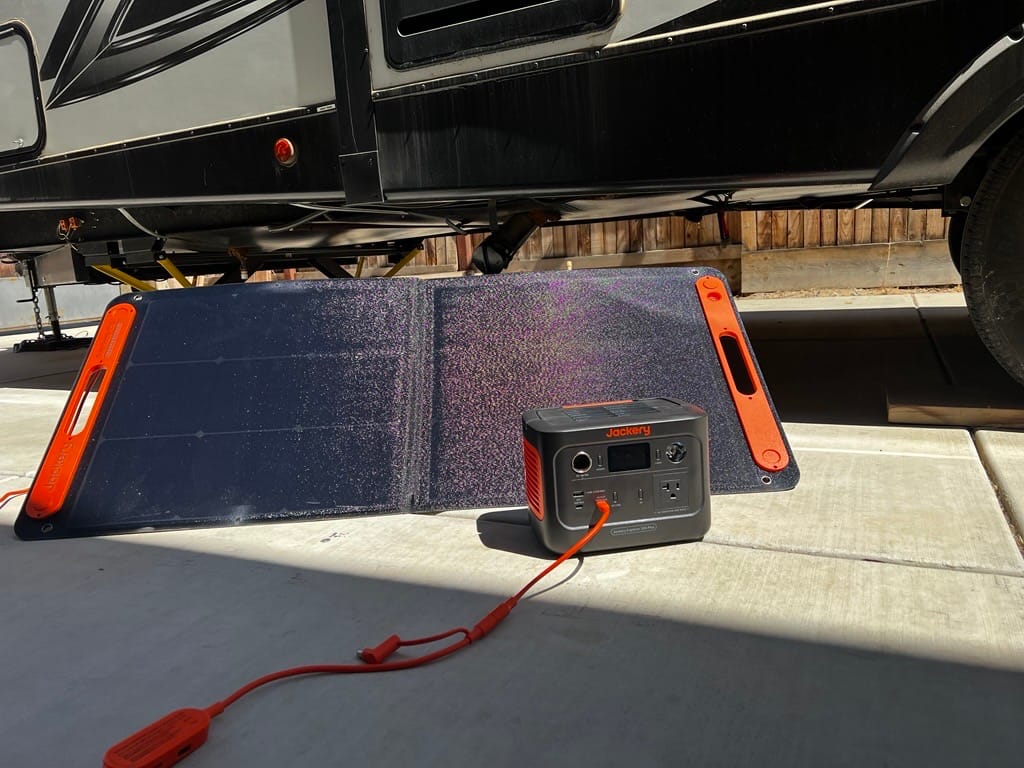
After a year of real-world use, here’s my honest take on the Jackery Explorer 300 Plus paired with the SolarSaga 100W panel—how I’ve been using it, what impressed me, and what you need to know before buying.
Specifications:
| Feature | Explorer 300 Plus | SolarSaga 100 W Panel |
| Energy Storage / Output | 288 Wh, 300 W (600 W surge) | 100 W solar input |
| Battery Chemistry | LiFePO₄ (3,000-cycle life to 80%+ Capacity) | — |
| Output Ports | USB-C ×2, USB-A ×1, AC ×1, DC/car port | USB-C (5 V 3 A), USB-A (5 V 2.4 A) |
| Input Options | AC 200+ W, USB-C 100 W, solar | Solar (to Jackery power station) |
| Noise Level | ≤ 30 dB silent charging mode | Silent (passive) |
| Dimensions (compact) | ~9×6×7 in; 8.27 lbs | 24×21×1.4 in folded; 48×21 in open; ~8.5 lb |
| Temperature / Durability | 14~113°F operational | 4~149°F; IP65/68 waterproof |
| Warranty | 5 years (if registered) | ~2 years (may vary) |
Where to get one:
How I have been using it:
I ordered the 300 Plus just over a year ago. Since then, it’s been my go-to emergency power station for charging phones and small devices, a power source for my telescope, and even a backup for our laptops when an outlet wasn’t convenient.
Emergency Power:
It won’t keep a refrigerator or TV running, but during short outages, it’s been a lifesaver for keeping phones, tablets, and small gear charged until power returned.
Telescope Power:
My telescope setup averages around 18W of power use. The 300 Plus has powered sessions lasting up to 10 hours without running out. No more dragging out extension cords—huge win.
The App:
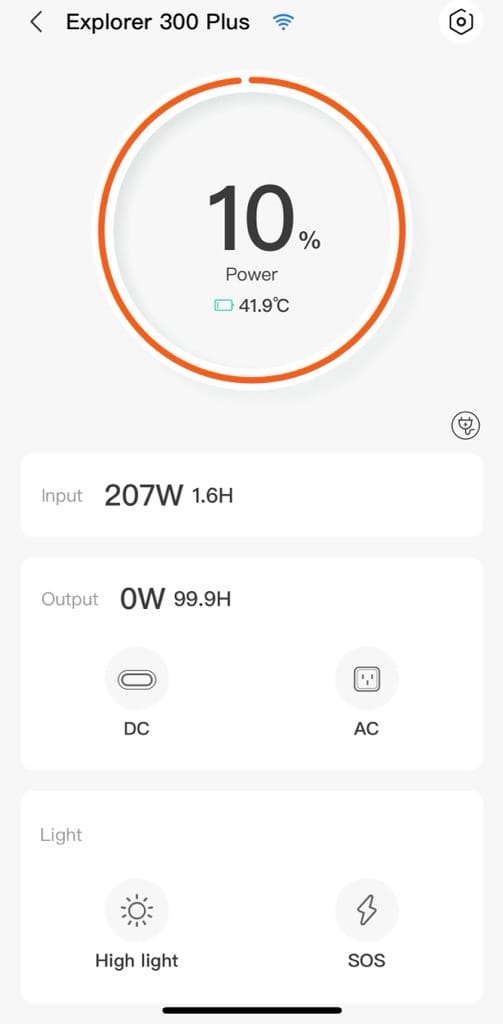
On iPhone, the app is simple and intuitive. It lets you:
- Monitor battery level and unit temperature
- Turn AC/DC outputs on or off
- Control the integrated light
Testing (well sort of):
My testing was basic but still gave me a sense of what to expect.
Power Draw Test:
Using my Ego Power battery charger with a 6Ah battery, I was able to pull 266W from the inverter—about an 8% loss from the 288W spec. Considering inverter inefficiency, that’s reasonable.

Solar Charging Test:
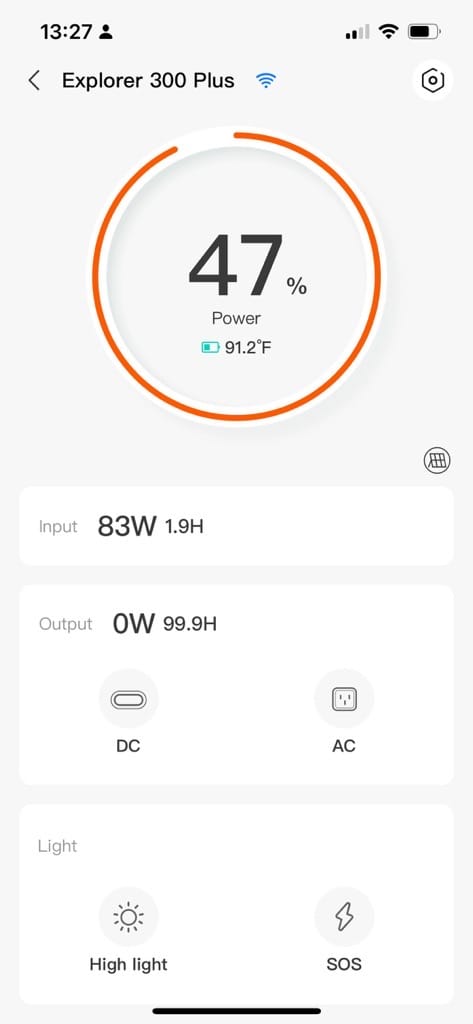
With the 100W panel, a full charge took about 3.5 hours in ideal conditions. My first attempt took much longer because I left the unit in direct sun, heating it up by about 20°F more than when shaded. Lesson learned: shade the station.
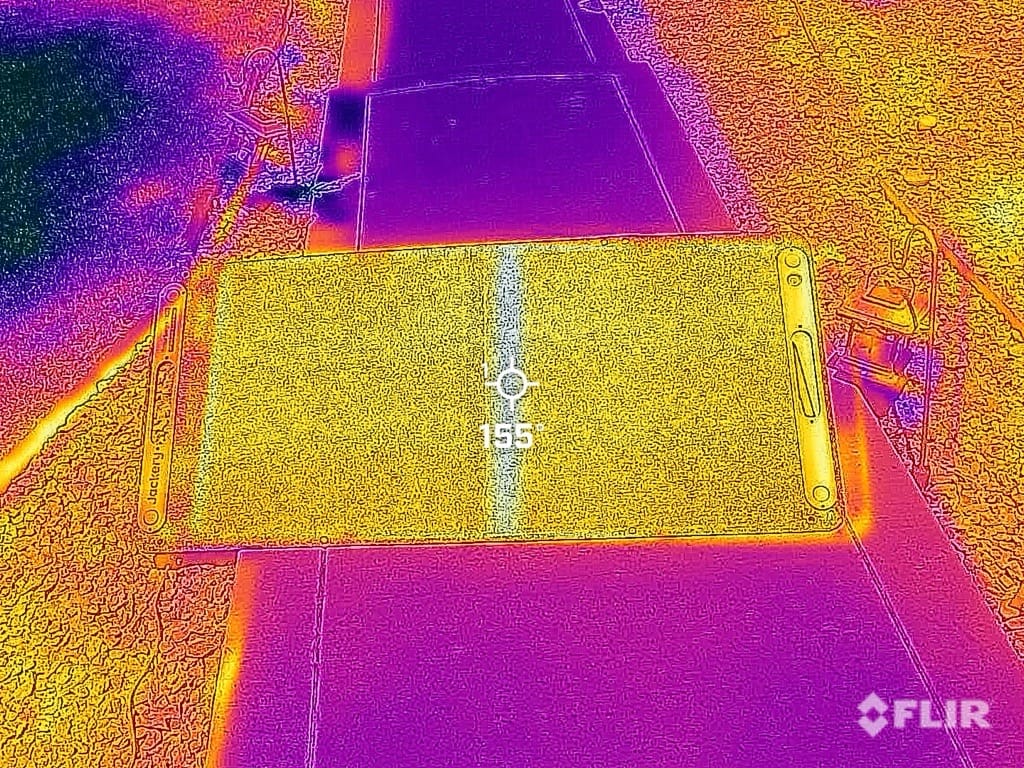
Also, note: the panel itself gets hot—my FLIR camera recorded 155°F on the surface.
Final thoughts:
The Jackery Explorer 300 Plus delivers exactly what it promises. It’s compact, reliable, and easy to use. If you find it on sale, I’d recommend grabbing one—it’s been a versatile tool for both daily convenience and peace of mind during outages.